




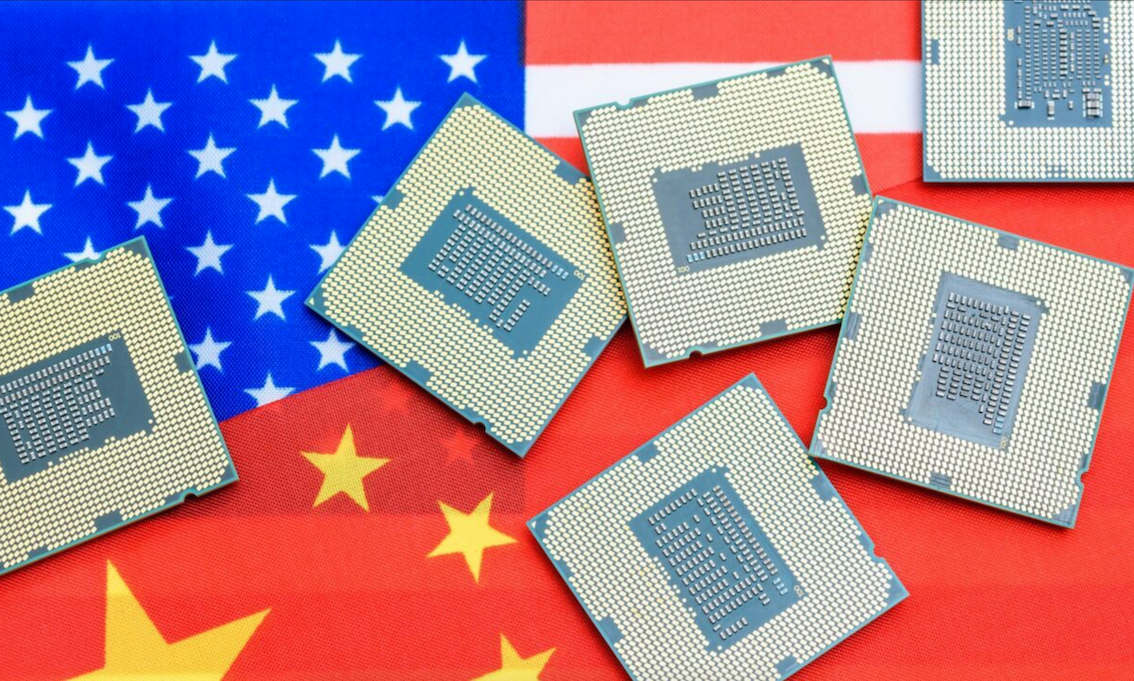
America’s AI strategy is too narrowly targeted on the technology itself, while China’s embraces the wider technological and infrastructural ecosystem.
Both the United States and China are vying for leadership in the global artificial intelligence race. US companies currently seem to be in pole position, with their lead estimated at roughly six months. But that lead is tenuous, as several recent Chinese companies have demonstrated. The two nations differ in their strategies for achieving and sustaining an AI lead, and in the broader consequences that flow from their respective approaches.
The United States has built its AI advantage by unleashing its entrepreneurial private sector to proceed at breakneck speed. To sustain its edge, it has bet on going it alone, developing closed models while employing state controls to deny, delay, or otherwise restrict Chinese access to cutting-edge models or their underlying hardware.
China, by contrast, has extended its more government-centric approach to AI. It guides, oversees, and supports private-sector AI development while advocating open models and actively building an international AI ecosystem around its technologies and standards.
Despite these important differences, what most critically sets the United States and China apart is the role of AI in their grand strategies. The United States is putting most of its eggs in one basket, seemingly believing that AI dominance will unlock future economic prosperity, military superiority and geopolitical power. China has instead embraced a portfolio approach, placing several major technological and industrial bets alongside AI.
Wall Street has become intimately involved in the US gamble. It is facilitating unprecedented investments in AI and its underlying infrastructure that dwarf those in other technological domains. Thereby tying its fortunes to the success of the AI gamble. Graham Allison has fittingly described this as America’s “cosmic bet” on AI.
China, however, embeds AI in a much broader industrial and technological strategy. After initially relying heavily on foreign technology and building increasingly efficient production ecosystems around it, Beijing is now investing in STEM education and research, critical minerals, supply chains, robotics, batteries, electric vehicles, shipbuilding, aerospace, telecommunications, energy, and biotechnology. In parallel, it is building a broad international coalition to dominate standard-setting and expand its clout globally. It is betting both on the synergies among the individual components and on the success of at least some of them.
Both nations thus aim to shape not only their national fortunes but also the global future, but they are proceeding very differently. Which approach will prove superior is unknown. But this uncertainty, and the risk it entails, matters most right now.
Portfolio managers instinctively understand the underlying problem. Concentrating investment in a single asset can generate extraordinary returns, provided the central assumption proves correct. Diversification sacrifices some upside in exchange for greater resilience under uncertainty. While countries are not investment funds and every strategy involves trade-offs, the principle holds. Prudent grand strategy should not hinge on the expectation that the future will unfold as one forecast predicts.
Ecology provides a telling analogy. Monocultures often maximize productivity under stable conditions because they concentrate resources on one successful species. Changing environments reward different qualities. Diverse ecosystems possess multiple adaptive pathways: when one component weakens, others compensate. Their resilience comes not simply from diversity, but from interactions among their different elements.
The same applies to strategic ecosystems. A country might gain a temporary advantage by mastering a single technology, but that hardly guarantees long-term success. Recall Samuel Huntington’s observation in his iconic 1988 Foreign Affairs article that “the ultimate test of a great power is its ability to renew its power.” How likely is it that a single technology will yield this result? Can it prove sustainable and resistant to challenges from those inside and outside who are either disadvantaged by it or can harness it to their advantage?
Thus, even if America achieves a formidable AI lead, China will have every incentive to counter it. And what could work to its advantage is that digital and physical power operate on different clocks. AI may help design better submarines, but it cannot instantly build the shipyards to make them. AI might help discover better battery chemistry, but mines, refineries and factories must still be constructed to harness it. Technological superiority can emerge quickly, but physical ecosystems required to convert it into power still take decades to build. Once built, it risks inducing complacency precisely when the challenges to take it on mature.
China has not necessarily found a superior model. Its approach carries significant risks, including misallocation, overcapacity, and political rigidity. But China has created a more agile general-purpose strategic architecture in which failure in one technological domain will not undermine the larger strategy. America, by contrast, is making a concentrated wager that may yield greater upside but also risks graver consequences if expectations prove wrong.
The vulnerabilities associated with the US cosmic bet are increasingly apparent. They range from the toll data centers impose on water and electricity demand to AI’s unsettling effects on the workforce. The US stock market’s heavy dependence on a handful of AI companies, combined with the prospect of rogue AI models, creates further single points of failure in the overall strategy.
Great-power competitions are marathons, not sprints. The first Cold War was not decided by Sputnik, Apollo, or any single technological breakthrough. The United States ultimately prevailed because its broader political, economic, technological, and industrial system proved more adaptive and enduring over four decades of competition. It repeatedly generated new advantages after earlier ones had ceased to be decisive. This is the capacity for renewal that Huntington identified.
The greatest danger facing the United States is not losing the AI race. It is that it will construe a technological lead in a single domain as a strategy capable of meeting the Chinese challenge in the long geopolitical marathon ahead.
About the Authors: Ariel Levite and Athanasios Platias
Ariel (Eli) Levite is a senior fellow at the Carnegie Endowment for International Peace and Harvard’s Belfer Center for Science and International Affairs. He served as principal deputy director general (policy) at the Israeli Atomic Energy Commission. He also served as the deputy national security advisor for defense policy. He headed the Bureau of International Security and Arms Control (an assistant secretary position) in the Israeli Ministry of Defense.
Athanasios Platias is professor emeritus of strategy at the University of Piraeus, president of the Council for International Relations–Greece, and coauthor of The Art of Strategy: 50 Maxims for War, Politics, Business and Everyday Life (London: Hurst, 2026). He was previously a Ford Foundation fellow at the Center for Science and International Affairs at Harvard University. Professor Platias taught for 18 years at the Department of International and European Studies at the Panteion University of Political and Social Sciences, Greece.