



Published at: https://nationalinterest.org/feature/donald-trumps-faulty-theory-of-ai-victory
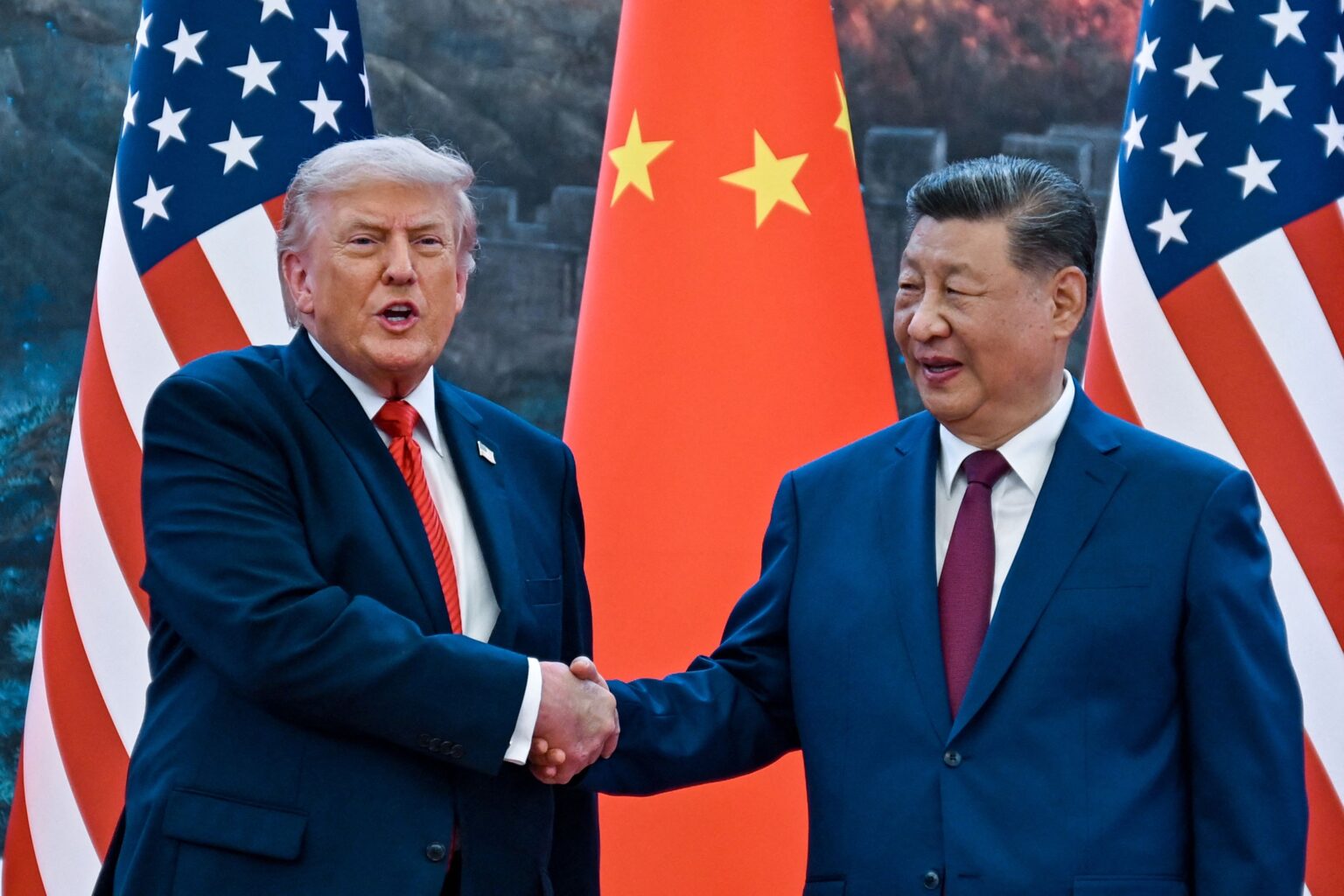
Last month’s US-China summit produced no meaningful change in President Donald Trump’s attitude toward AI developments. In a recent article in The National Interest, we examined the strategic assumptions underlying Washington’s “cosmic bet” on artificial intelligence. Recent developments have brought that wager’s risks into sharper focus.
Days before President Xi Jinping arrived in Washington, and after several of the industry’s most prominent AI developers challenged him to confront the risks of moving too fast, President Trump instead offered his clearest articulation yet of his AI theory of victory. It boiled down to four words: “Whoever wins AI wins.” Xi, meanwhile, alluded to the risks inherent in such an adversarial attitude.
Extending his logic, Trump expressed visceral resistance to AI regulation or a slowdown in development and said he would instead create an “AI Force” and appoint an “AI Czar” to oversee efforts to promote it. He went further, dismissing growing concerns about its feared downsides as nothing more sinister than a “hoax” promoted by a “sick conspiracy” that the existing criminal and civil justice systems could address. Unsurprisingly, therefore, on the margins of the Xi summit, Trump also declined to endorse Chinese proposals for shared AI guardrails, insisting that the United States would not be “putting on brakes.”
Later, to deflect public concern about accelerating AI deployment without slowing it, Trump convened many AI leaders at the White House, where they agreed to a voluntary safety self-regulation code. For now, he ruled out going any further. Hence, barring pressure from industry, Congress or the courts, the United States remains committed to full-throttle AI development. Whether this voluntary self-policing arrangement will put safety concerns to rest is doubtful. Even more disconcerting, however, is that no one seems to have considered the broader implications of the US’ “cosmic bet” on AI, as Graham Allison has called it.
One can only speculate about the rationale behind the president’s decision to place such a bet. A plausible candidate is that he aims to frame the AI race with China as a cover for the unabashed pursuit of AI dominance, generating wealth, productivity, scientific discoveries, and military prowess to crown his presidency a stellar success. Regardless, Trump’s AI wager fails to acknowledge, let alone address, the myriad risks of the United States pursuing a narrow, myopic, technology-centric approach to AI development to win an unbridled competition with China.
This current US approach might suffice to maintain, and even temporarily extend, its technical AI lead over China and leverage it. But what is disconcerting is the administration’s lack of appreciation for the strategic requirements to improve its odds of success, as well as the longer-term risks of engaging in an AI competition with China while sustaining a laissez-faire approach to the private sector’s unimpeded race for Artificial General Intelligence. It would take much more than articulating a loose regime for controlling rogue behavior of AI models (even if successful) for the United States to come out ahead in this contest with China. The United States must also articulate and implement a strategy that meets three conditions.
First, the strategy must ensure that the American lead can survive technological diffusion and Chinese adaptation.
Second, it has to include a game plan to convert AI sophistication into broader scientific, economic, industrial, and military assets.
Third, the strategy must articulate a concrete plan to make the AI-led transformation politically and socially sustainable.
The shaky premise underlying the diffusion challenge is apparent: it is already underway. Technology spreads fastest when the advantage it confers gives competitors strong incentives to imitate, substitute, and innovate around restrictions. The Chinese open-model ecosystem shows that Beijing is neither resigned to a permanent American lead nor to dependence on US chips or models. US export controls on state-of-the-art chips raise costs and delay Chinese progress.
Still, they cannot diminish the incentive to catch up, develop domestic alternatives to American technologies, and promote its models abroad. To match the United States in AI, China is already leveraging its significant advantages in energy supply and grid connectivity, lower construction costs, and easier permitting to vastly outperform the United States in the speed and scale of new data center construction.
China is presently better placed to leverage its AI prowess to advance the world’s largest supply chain and manufacturing base. It is embedding AI across a broader industrial and infrastructure architecture, drawing on and further empowering its talent pool that already excels in STEM disciplines. The corresponding US base is either much smaller or endangered. Furthermore, China is also engaged in a concerted effort to assuage (or repress) domestic concerns about AI’s adverse consequences and attract enterprises to its slightly less advanced but more affordable open-weight AI alternatives.